
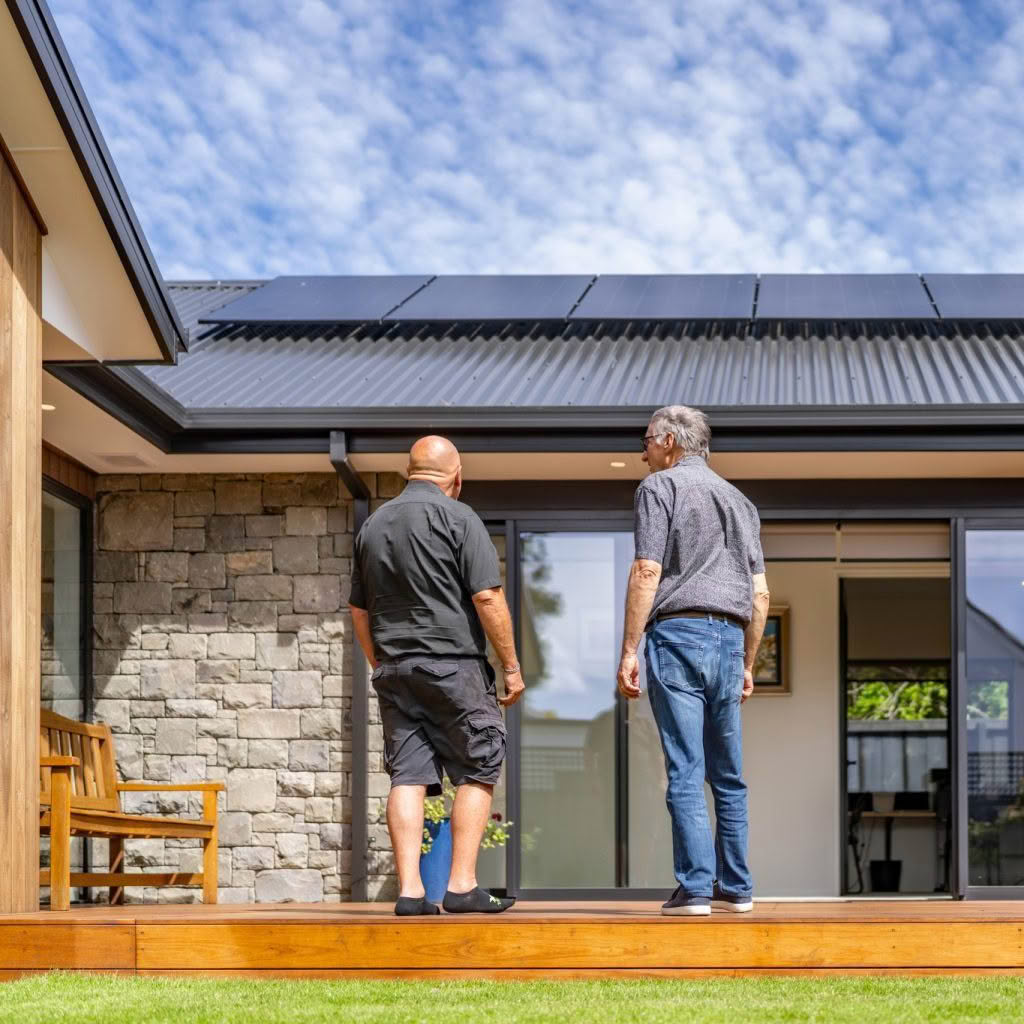
Energy-efficient homes reduce power bills in New Zealand by lowering the amount of electricity needed to keep the home warm, dry, well lit, and functional.
Green Homes’ standard spec incorporates key design elements, building methods and materials to reduce your home’s running costs so you can repurpose your savings!
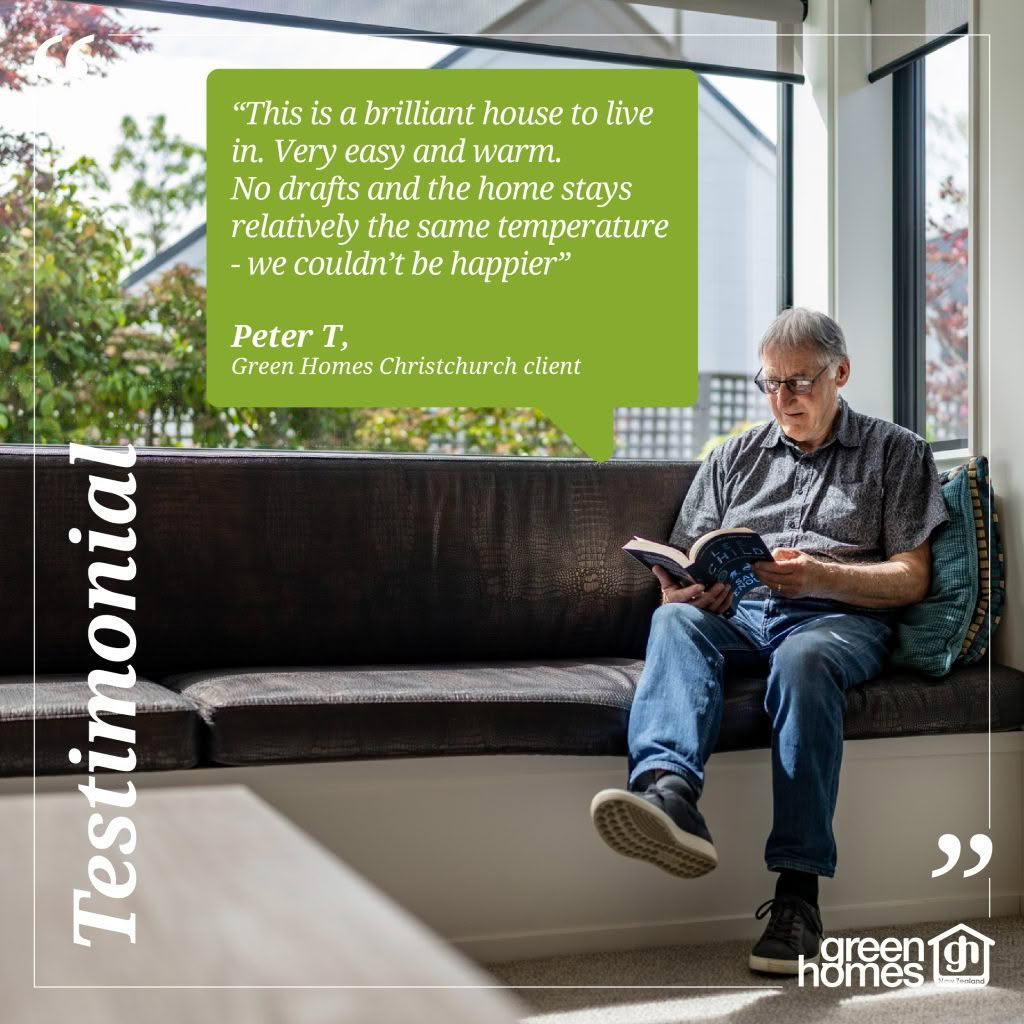
Main ways you can save money by building greener
Better insulation
- Ceiling, floor, and wall (and door) insulation slows heat loss in winter and heat gain in summer.
- In New Zealand, this matters a lot because many homes lose heat quickly and aren’t thermally efficient
- Less heat escaping means heaters run for less time.
High-performance windows
- Double glazing, Low-E Glass, Argon Gas & Thermally Broken Aluminium joinery and well-sealed frames reduce drafts and heat loss.
- That helps maintain indoor temperature, so less energy is needed for heating.
Draft stopping
- New homes have a better thermal envelope reducing heat loss
- Sealing gaps around doors, windows, and floors stops warm air from leaking out.
- Even small air leaks can make heating much less effective.
Efficient heating systems
- Heat pumps usually use much less electricity than plug-in heaters or older electric resistance heating.
- A more efficient heating system gives the same warmth for lower running cost
- Designing to optimise natural passive solar also compliments your heating systemHot water efficiency
- Hot water can be a large part of power use which is why Green Homes incorporates WELS rated tapware as standard
- Efficient cylinders, pipe insulation, low-flow showerheads, and smart water heating controls reduce that cost.
- Solar systems can also be installed to further control hot water bills
Efficient lighting and appliances - LED lights use far less power than older bulbs.
- Efficient fridges, washers, dryers, and dishwashers lower everyday electricity use – Green Homes uses energy efficient appliances as standard.
Solar generation
- If a home has solar panels, it can offset grid electricity use .
- This can reduce energy costs overall and some EVs can be run off a solar system
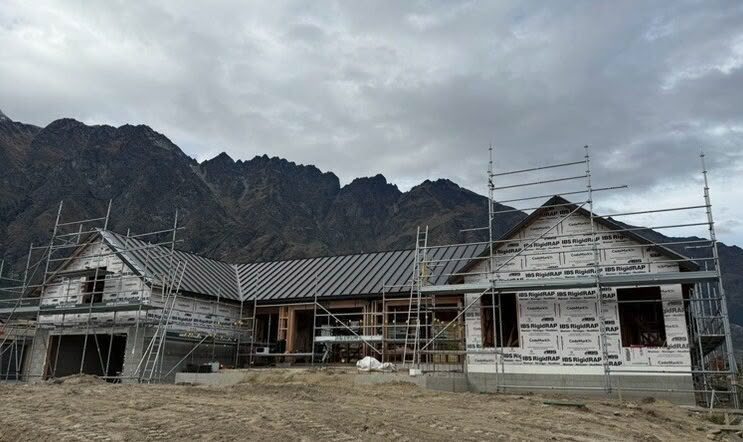
This Queenstown home has 36 solar panels and two batteries.
Smarter design
- Homes designed to capture winter sun and avoid unnecessary heat loss need less artificial heating.
- Good orientation, shading, all help reduce energy demand.
Better ventilation
- It’s widely accepted that even the latest building code still could do better when it comes to ventilation standards – ventilation systems dramatically control temperature, environment and help to make your home healthier
Why this matters especially in New Zealand
NZ homes often need significant heating in winter. Older housing stock can be cold, damp, and under-insulated. Since electricity is widely used for heating and hot water, reducing energy demand can noticeably cut bills.
In simple terms: an energy-efficient home keeps heat where you want it and wastes less electricity, so the household buys less power from the grid.
Green Homes takes a holistic view when it comes to energy efficient home building and we have a range of specifications to suit your budget and needs.
Give your local design & build team a call to find out more!